The first regular-season NFL game in Australia turns Melbourne into a major stop on the league's global calendar. Set for the Melbourne Cricket Ground, the historic matchup is more than an overseas showcase. It counts in the standings, carries real consequences for the teams involved, and gives Australian fans a chance to see the sport's biggest league at full competitive intensity.
For viewers in the United States, the game also brings a new time-zone wrinkle and a reminder of how quickly the NFL's international footprint is expanding. For fans across Australia and the wider Asia-Pacific region, it is a long-awaited moment that places local interest in American football on the same stage as the league's established games in London, Germany, and beyond.
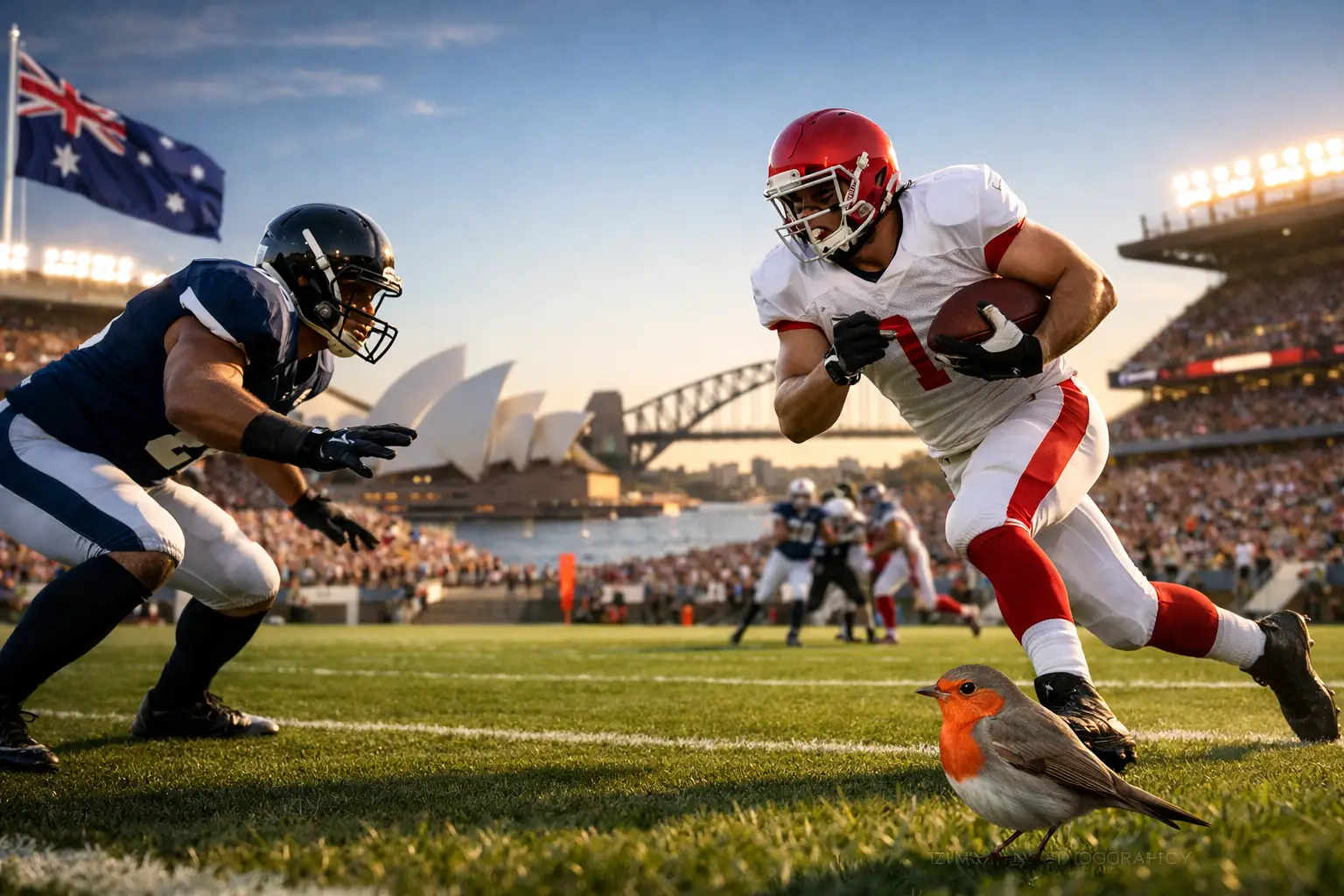
Why the NFL Chose Melbourne
Melbourne has the infrastructure, sporting culture, and stadium scale to host an event of this size. The MCG is one of the world's most recognizable sports venues, best known for Australian rules football and cricket, with a capacity that can turn a single game into a citywide occasion. It is not simply a stadium booking. The venue gives the NFL a setting that already understands major-event logistics, large crowds, and international television audiences.
The league's choice also reflects the steady growth of NFL interest in Australia. Games have long drawn committed viewers despite difficult live broadcast hours, while fantasy football, social media clips, streaming access, and college football coverage have made the sport easier to follow year-round. Australian players competing in the NFL and college football have added another point of connection.
There is a practical business case as well. Australia is a mature sports market with avid fans, strong tourism appeal, and a population accustomed to supporting teams and leagues from overseas. A regular-season game gives the NFL a more meaningful way to test and build that audience than a preseason event would.
The First Regular-Season NFL Game in Australia Is Different
The word "regular-season" is the key detail. Exhibitions can be entertaining, but teams often limit the snaps of their top players and experiment with roster decisions. A game that affects playoff positioning is a different product. Coaches prepare to win, star players are expected to play unless injured, and every possession has the pressure familiar to fans watching Sunday games in the U.S.
That raises the stakes for the home team, the visiting team, and the league. Travel, recovery, practice schedules, and the unfamiliar timing of the week all become part of the competitive equation. A team that handles the trip well could gain an experience that pays off later in the season. A team that struggles with the disruption may face a tougher adjustment than it would at a conventional road venue.
The Los Angeles Rams were designated as the home team for the inaugural Australian game, making their participation central to the event's rollout. The final opponent, kickoff time, ticket procedures, and broadcast plans are details fans should confirm through official NFL and team announcements, since international scheduling arrangements can change as the season approaches.
What the Game Means for Fans
For Australian fans, this is a chance to move from watching through a screen to taking part in the full NFL event environment. The game itself will be the centerpiece, but the surrounding week is likely to matter just as much. International games typically create a schedule of fan experiences, team activities, media coverage, youth programs, and city events designed to make the most of the visiting audience.
That does not mean every fan needs to travel to Melbourne. Demand for a first-of-its-kind game can make tickets, accommodation, and transportation more expensive than a normal weekend. Fans considering the trip should treat it as a major sports event: set a budget early, allow extra time for stadium entry and public transportation, and watch for official ticket guidance rather than relying on unverified resale offers.
For U.S. viewers, the unusual kickoff window may be part of the appeal. International games can create early-morning or late-night viewing depending on location, and Australia presents one of the most dramatic time differences yet for the NFL. That is a challenge for casual viewers, but it can also make the game feel like a special event rather than another stop in a crowded weekly schedule.
A Test for the NFL's Asia-Pacific Strategy
One game does not establish a permanent NFL market on its own. London developed over multiple years, with repeated games, local fan investment, commercial partnerships, and an increasingly familiar place on the annual schedule. Germany's regular-season games have followed a similar pattern of growing demand and broader league commitment.
Australia begins with advantages and constraints. The country has strong sports participation and a highly engaged event culture, but the distance from the United States makes travel planning more complicated than it is for Europe. Teams will pay close attention to how the long flight affects player health, preparation, and the following week's schedule. The league will be watching attendance, broadcast reach, merchandise demand, sponsor interest, and the response from fans who are new to the sport.
The result could shape what comes next. If the event delivers on the field and off it, Melbourne may become a recurring location, while other Australian cities could enter future conversations. It could also lead to more preseason activity, flag football development, and youth participation programs across the region. Expansion of the NFL's presence does not necessarily mean a franchise is around the corner. More realistically, it means a deeper annual connection between the league and a growing international audience.
The MCG Factor
The Melbourne Cricket Ground gives this game a level of scale that few debut international venues can match. Its history carries weight well beyond Australian sport, and its size allows the NFL to present the matchup as a landmark occasion rather than a limited-capacity experiment.
Still, the stadium's identity also highlights the NFL's challenge. Australian sports fans have established traditions, teams, seasons, and codes they care about deeply. The NFL does not need to replace any of them to succeed. Its opportunity is to become another meaningful option in a sports culture already comfortable with elite competition and global events.
That makes the presentation important. Newer fans will need clear, accessible coverage that explains the stakes, rivalries, rules, and players without talking down to longtime followers. Established NFL fans will want the same authentic game-day energy they expect from any regular-season contest. Meeting both needs is part of what makes the inaugural game a useful test.
What to Watch Before Kickoff
The most useful updates will be the practical ones: confirmed teams, game date and local kickoff time, broadcast availability, ticket release information, travel guidance, and fan-event schedules. Those details will determine whether the game is a television appointment, a weekend trip, or both.
On the football side, watch how the participating teams arrange their travel and recovery plans. International games have shown that logistics can become a genuine storyline, especially when clubs are balancing a demanding early-season schedule. The first regular-season NFL game in Australia will be remembered for the score, but its longer-term impact may depend on whether players, fans, and the host city all leave wanting the league to return.
For a sport built on weekly rituals, bringing a meaningful game to Melbourne creates a fresh one: a new crowd, a new clock, and a new chapter in the NFL's international story.