A fire can disrupt an ordinary workday within minutes, especially when employees don't recognize the warning signs of a developing hazard. A damaged electrical cord or an overcrowded storage closet might seem harmless until the wrong conditions turn a small problem into a serious emergency.
Knowing these top eight ways to reduce fire risks in your office building can help you identify these concerns before they threaten employees or damage property. Fire prevention starts with everyday decisions, from maintaining equipment to keeping shared spaces safe for everyone who uses them.
1. Inspect Electrical Equipment Regularly
Modern offices depend on electrical equipment throughout the workday, making electrical safety an important part of fire prevention. Computers and printers place continuous demands on building circuits, particularly in older properties with outdated wiring.
Inspect power cords for fraying, exposed wires, or other visible damage. Employees should report outlets that feel unusually warm or produce unusual odors, as these warning signs may indicate an electrical problem.
Avoid connecting multiple power strips or relying on extension cords for permanent equipment setups. These arrangements can overload circuits and increase the likelihood of overheating.
If your building experiences frequent breaker trips, contact a qualified electrician to investigate. Professional inspections can identify hidden wiring problems before they develop into dangerous conditions.
2. Store Flammable Materials Safely
Office buildings often contain more potentially hazardous materials than employees realize. Cleaning supplies, aerosol products, and maintenance chemicals can create fire hazards when stored near heat sources.
Even familiar products deserve a closer look, particularly when they contain flammable or combustible materials. Knowing how these materials behave around heat can help facility managers choose safer storage locations and avoid unnecessary risks.
Review product labels and safety data sheets to determine appropriate storage conditions. Certain chemicals require specialized cabinets, while others need separation from electrical equipment or incompatible substances.
Avoid keeping unnecessary quantities of hazardous products in crowded supply closets. Designate suitable storage areas and make sure employees know where these materials belong. Regular inventory checks can also help prevent forgotten supplies from accumulating in storage rooms.
3. Keep Emergency Exits Accessible
During a fire, employees need a clear path out of the building. Unfortunately, everyday workplace activities can create unexpected obstacles along evacuation routes.
Deliveries left in hallways or furniture placed near exit doors may interfere with movement during an emergency. Even temporary obstructions can create confusion when several people try to evacuate at once.
Inspect stairwells and corridors regularly, paying particular attention to areas where employees tend to store unused equipment.
Emergency exit doors should open easily and remain free from unauthorized locks or barriers. Make sure illuminated exit signs remain visible throughout the building.
Consider employees or visitors with mobility limitations when reviewing evacuation procedures. Accessible routes and appropriate assistance arrangements can help everyone leave safely.
4. Maintain Fire Alarms and Sprinkler Systems
Fire detection and suppression equipment can limit the consequences of an emergency, but these systems require consistent maintenance to function properly.
Schedule inspections according to local fire safety requirements and manufacturer recommendations. Qualified technicians can evaluate equipment performance and identify components that need attention.
During routine building inspections, look for common concerns such as:
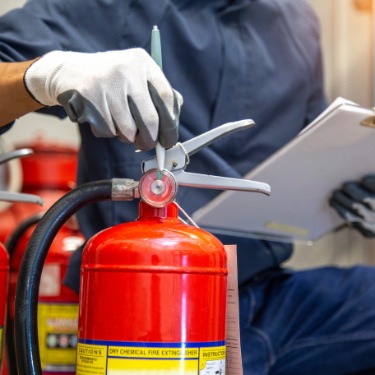
- Fire extinguishers with missing inspection tags or blocked access
- Smoke detectors showing visible damage or maintenance warnings
- Sprinkler heads obstructed by decorations or tall storage shelves
- Fire alarm panels displaying unresolved trouble signals
Address maintenance concerns promptly rather than waiting for the next scheduled inspection.
Keep accurate service records, especially if multiple contractors maintain different parts of your building's fire protection systems. Organized documentation helps facility managers track recurring problems and coordinate repairs.
5. Reduce Fire Hazards in Office Kitchens
Break rooms give employees a convenient place to prepare meals, but their appliances can introduce fire hazards when people overlook basic precautions.
Microwaves, coffee makers, and toaster ovens generate heat during normal operation. Food residue or nearby paper products can increase the likelihood of a fire.
Encourage employees to clean shared appliances regularly and follow manufacturer instructions. Avoid placing combustible materials near heating elements or ventilation openings.
Employees should never leave cooking equipment unattended while preparing food. If an appliance produces smoke or develops an unusual smell, staff should stop using it and report the concern.
Facility managers can support safer habits by posting simple kitchen guidelines and providing appropriate waste containers.
Regular appliance inspections also help identify damaged plugs or malfunctioning equipment before employees encounter problems.
6. Improve Housekeeping Throughout the Building
Clutter may seem like an organizational concern, but excessive storage can increase the amount of combustible material inside an office.
Stacks of cardboard boxes or discarded packaging can provide fuel if a fire starts nearby. These materials become particularly concerning when employees leave them near electrical equipment or heating systems.
Establish a cleaning schedule that addresses shared workspaces and storage rooms. Encourage employees to dispose of unnecessary paperwork instead of allowing large piles to accumulate around desks.
Waste collection areas also deserve regular attention. Overflowing bins can create hazards, particularly when employees discard materials without considering their contents.
Keep electrical panels accessible and maintain appropriate clearance around mechanical equipment.
Good housekeeping also makes developing problems easier to spot. Employees can identify damaged outlets or overheating equipment more readily when clutter doesn't hide potential warning signs.
7. Teach Employees How to Respond to Fire Hazards
Even a well-maintained building can experience an emergency. Employees need clear instructions about recognizing hazards and responding appropriately when something goes wrong.
Introduce fire safety procedures during onboarding and provide refresher training throughout the year. Explain how employees should report damaged equipment or suspicious odors.
Evacuation training should cover designated exits and outdoor assembly locations. Employees should also know how to alert others and contact emergency services.
Conduct evacuation drills according to applicable regulations and your building's emergency plan. These exercises help employees become familiar with escape routes while revealing potential problems with evacuation procedures.
Encourage employees to report concerns promptly, even when a problem appears minor. A workplace culture that welcomes safety feedback gives facility managers more opportunities to address hazards before an emergency develops.
8. Develop a Consistent Fire Prevention Plan
Fire prevention requires ongoing coordination, especially in buildings where multiple departments share equipment and common areas.
A written prevention plan clarifies responsibilities and sets expectations for maintaining safe conditions.
Assign personnel to coordinate inspections and monitor outstanding maintenance concerns. Review the plan whenever renovations or equipment changes introduce new hazards.
Facility managers should also communicate with property owners and local fire authorities about applicable requirements. Building size and occupancy can influence which safety measures local regulations require.
Among the most effective ways to reduce fire risks in your office building, consistent oversight can make a lasting difference. Regular reviews help employees recognize their responsibilities while giving management a clearer picture of developing concerns.
Make Workplace Fire Safety an Everyday Priority
Fire prevention works best when everyone understands how their actions affect workplace safety. A clear hallway or a timely equipment repair may seem like a small improvement, but these decisions can reduce the conditions that allow fires to develop.
With regular maintenance and active employee participation, your office can maintain a safer environment while reducing preventable disruptions to daily operations.
Bio: Casey is a passionate copyeditor highly motivated to provide compelling SEO content. Her expertise spans technical, consumer, and lifestyle industries with an emphasis on readability and detail.