Maintaining a contamination-free lab is fundamental to ensuring the accuracy of research, the safety of staff, and the success of experiments. Despite advancements in technology, lapses in lab sterility can lead to skewed results, health risks, or compromised product quality.
By adhering to best practices for maintaining a contamination-free lab, laboratories can operate confidently and precisely, minimizing risks and maximizing outcomes. Here’s how to achieve it.
1. Implement a Strict Access Policy
Restricting access to only authorized personnel is one of the simplest and most effective ways to reduce contamination risks. Train all staff on proper lab protocols and enforce the use of protective equipment such as gloves, lab coats, and shoe covers at all times. It’s also important to control movement in and out of the lab and limit exposure points to create a first line of defense against contamination.
2. Disinfect Workspaces Regularly With Effective Agents
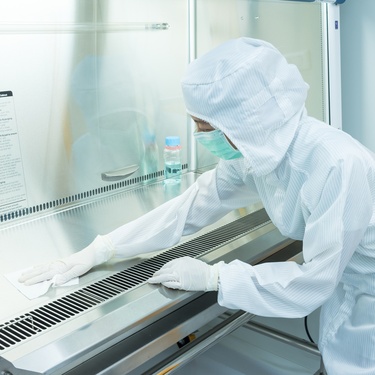
Proper disinfection is essential for maintaining a lab’s integrity. Clean workspaces before and after use with EPA-approved disinfectants, like hydrogen peroxide, and follow manufacturer guidelines to ensure effectiveness against bacteria, viruses, and fungi.
Pay special attention to high-contact surfaces, such as benchtops, equipment handles, and storage areas, as these are common areas for contamination. Implement regularly scheduled deep cleanings of the entire lab space to address hard-to-reach areas and reduce long-term risks.
3. Standardize Cleaning and Maintenance Protocols
A clean lab is a sterile lab. Develop and enforce a daily cleaning checklist for all lab spaces, including commonly neglected areas like ceilings and ventilators. Create a daily routine to inspect and maintain equipment to ensure proper function and sterility. Keeping a logbook for cleaning and maintenance schedules can ensure consistency.
4. Control Air Quality With Proper Ventilation Systems
Contaminants can travel through the air, making proper ventilation systems crucial for lab sterility. Use high-efficiency particulate air (HEPA) filters to minimize airborne particles. Regularly service HVAC systems to prevent blockages or leaks that can introduce contaminants. For high-security labs, consider pressurized cleanrooms to maintain controlled airflow and filter out external pollutants.
5. Handle Samples and Materials With Care
Improper handling of materials can be a major source of cross-contamination. Use aseptic techniques when dealing with high-risk samples, and always seal specimens in sterile containers. Additionally, avoid unnecessary transfer of samples between workstations to reduce exposure points. Label materials clearly to prevent mix-ups and ensure reproducibility.
6. Monitor Humidity and Temperature Levels
Environmental factors, such as humidity and temperature, can directly affect the sterility of lab spaces. High humidity levels promote microbial growth, while fluctuations in temperature can compromise the integrity of biological samples. We recommend implementing reliable monitoring systems to maintain optimal conditions and promptly address any irregularities.
7. Conduct Periodic Training and Audits
Even with effective protocols, human error can be a weak link in contamination control. Conduct regular refresher training sessions to inform laboratory staff of best practices and any updates in guidelines. Perform periodic audits to identify any lapses in protocol and address them proactively.
Precision, Safety, and Accountability in Every Step
By adopting these best practices for maintaining a contamination-free lab, you ensure a safe, efficient, and reliable work environment. From enforcing access policies to leveraging advanced disinfection methods, every detail contributes to the integrity of your laboratory’s operations. Precision begins with preparation, and every step toward enhanced sterility leads to greater results.
Bio: Casey is a passionate copyeditor highly motivated to provide compelling SEO content in the digital marketing space. Her expertise includes a vast range of industries from highly technical, consumer, and lifestyle-based, with an emphasis on attention to detail and readability.