Bridging the gap between the physical and digital worlds requires precise tools. Whether you are preserving historical artifacts or ensuring the quality of aerospace components, 3D scanning technology acts as the critical translator.
Given the market’s saturation with devices ranging from handheld consumer gadgets to industrial-grade metrology systems, finding the right 3D scanning equipment for your needs can be challenging. This brief guide is here to help you through this process.
Define Your Application
Before browsing specifications, you’ll need to pinpoint exactly why you need to capture 3D data. The “best” scanner for a video game developer looks very different from the best scanner for a mechanical engineer.
If you are in manufacturing, your priority is likely metrology-grade accuracy for quality control or reverse engineering. You need a device that can verify tolerances down to the micron. Conversely, in healthcare, patient comfort and speed are paramount, requiring scanners that can capture body geometry quickly without requiring the subject to hold their breath for minutes. For architecture and preservation, the focus shifts to range and environmental durability.
Understand Object Characteristics
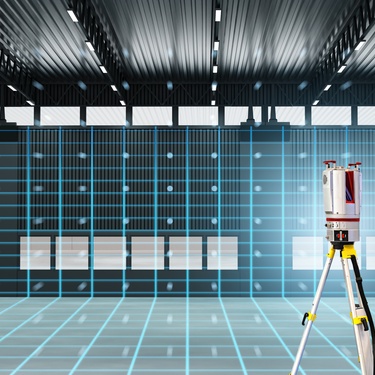
The physical nature of what you are scanning dictates the technology you need. That’s why you should start by considering the size of what you’re scanning. For example, a micro-chip will require a macro lens and extreme resolution, while scanning a warehouse requires a long-range terrestrial scanner (LiDAR).
Material properties are equally important. Many optical scanners struggle with transparent, black, or highly reflective surfaces. If you can’t coat the object with scanning spray, you will need a blue laser scanner or a system specifically designed to handle challenging surfaces. Finally, consider the environment. A structured light scanner might struggle outdoors in bright sunlight, whereas laser scanners generally perform better in varying lighting conditions.
Evaluate Scanner Technologies
Once you know the what and where, look at how you’re going to scan an object. Different technologies are better for specific processes than others.
- Laser Triangulation: Excellent for high accuracy and resolution. These scanners project a laser line (red or blue) onto the surface and use a camera to calculate geometry. They are the workhorses of industrial inspection.
- Structured Light: These devices project a pattern of light (grids or fringes) onto an object. They are typically faster than laser scanners and offer high resolution, making them ideal for capturing organic shapes and human faces.
- Photogrammetry: This method uses photographs from different angles to reconstruct 3D models. While often less accurate for engineering, it provides superior color and texture data, making it a favorite for visual effects and cultural heritage documentation.
Consider Workflow and Software
Choosing the right 3D scanning equipment is only half the equation. The raw data (point cloud) is just as important, since you’ll need to process it into a usable format (mesh or CAD model). Ensure the scanner comes with robust proprietary software or is compatible with third-party suites. Don’t forget to back up your data as well—this is a common 3D laser scanning mistake that too many companies make when first using the technology.
Also, be sure to assess the processing speed and ease of use. Does the software offer automated hole-filling and mesh optimization? If your workflow involves importing data directly into other programs, look for scanners with seamless plug-ins or direct export features to streamline the transition from scan to design.
Bio: Casey is a passionate copyeditor highly motivated to provide compelling SEO content in the digital marketing space. Her expertise includes a vast range of industries from highly technical, consumer, and lifestyle-based, with an emphasis on attention to detail and readability.